
Climate change, water scarcity, deforestation, plastic pollution and declining biodiversity have turned environmental protection into one of the defining challenges of the 21st century. Governments and environmental organizations are increasingly focusing on solutions that combine awareness with practical action at the community level.
Against this backdrop, several environmental initiatives associated with Saint Dr. Gurmeet Ram Rahim Singh Ji Insan and Dera Sacha Sauda have focused on tree plantation, cleanliness, water conservation, plastic reduction, organic farming, energy conservation and the development of mini forests.
Dera Sacha Sauda describes these activities as part of a broader welfare framework aimed at encouraging people to make environmental responsibility part of everyday life. Its current humanitarian-works information lists initiatives including the Nature Campaign, Cleanse Campaign, Rainwater Harvesting and Mini Forests on Farmlands.
Why Environmental Awareness Has Become So Important
Environmental degradation affects much more than forests and wildlife.
Air pollution can affect human health, water scarcity can threaten agriculture and livelihoods, while deforestation can contribute to biodiversity loss and soil degradation. Plastic waste can contaminate land and waterways, while inefficient use of energy and water places additional pressure on natural resources.
Because many environmental problems are connected to everyday human behavior, awareness at the community level can play an important role.
The environmental campaigns associated with Dera Sacha Sauda attempt to address this issue by encouraging followers and communities to participate directly rather than treating environmental protection only as an institutional responsibility.
The Nature Campaign and Large-Scale Tree Plantation
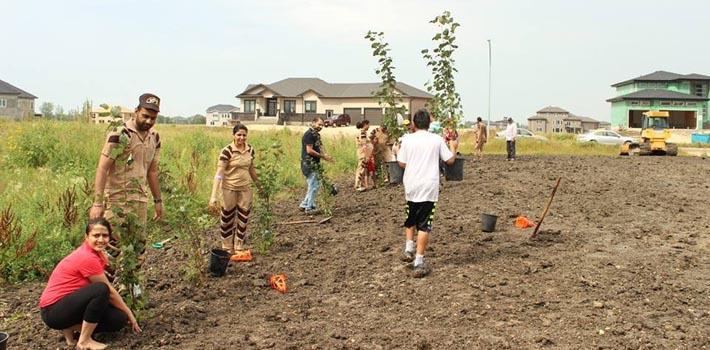
Tree plantation is one of the most prominent environmental initiatives associated with Saint Dr. Gurmeet Ram Rahim Singh Ji Insan.
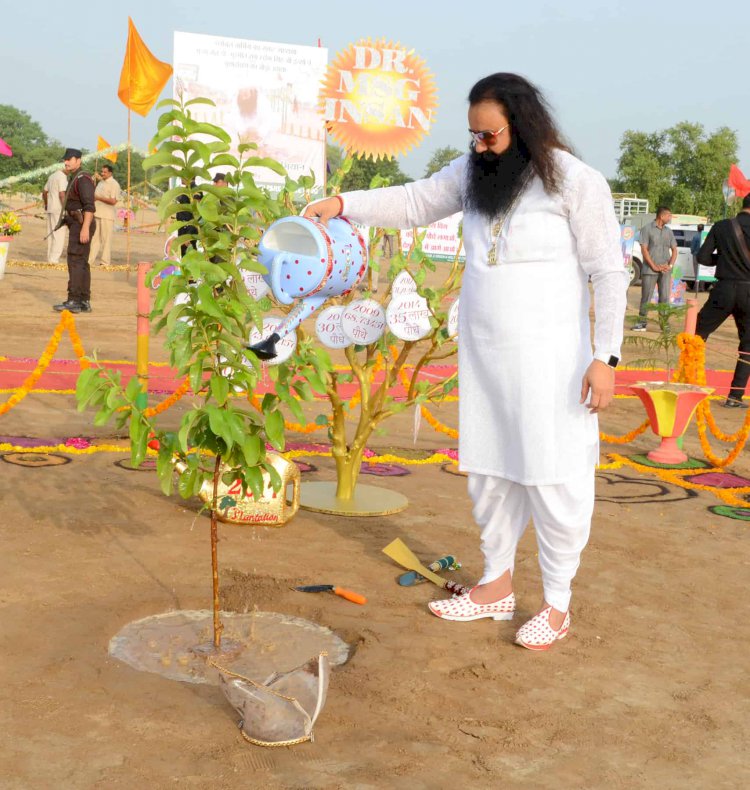
Dera Sacha Sauda’s Nature Campaign encourages people to plant and nurture trees as part of environmental conservation. According to the organization’s latest published figures, 350,788,119 trees were planted between 2007 and June 24, 2026 under the campaign. This is an organization-reported figure and should therefore be understood as such rather than as an independently audited environmental statistic.
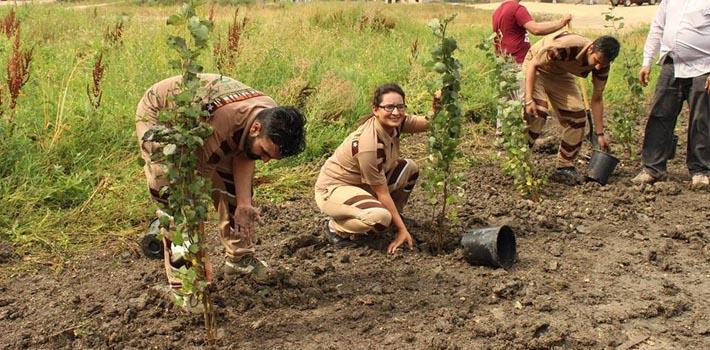
The campaign is designed not simply around planting saplings but also around encouraging people to take responsibility for their growth.
Dera Sacha Sauda says tree plantation is carried out throughout the year and is especially promoted around important occasions. Its environmental material describes planting trees as a way of creating greater awareness about deforestation and environmental degradation.
From Plantation to Tree Care
Planting a sapling is only the beginning of environmental restoration.
A tree requires water, protection and years of growth before it can provide significant ecological benefits. Dera Sacha Sauda’s campaign therefore emphasizes nurturing planted trees rather than treating plantation as a one-day activity.
This distinction is important for any large-scale afforestation campaign because long-term survival rates matter as much as the number of saplings initially planted.
Mini Forests: A New Approach to Local Green Cover
One of the newer environmental initiatives associated with Dera Sacha Sauda is the development of mini forests or pocket forests.
In 2025, the organization described mini forests on farmland as its 170th welfare initiative. The concept involves developing dense tree-covered areas on relatively small patches of land or planting trees along farm boundaries.
The basic idea is particularly relevant in areas where creating a large conventional forest may not be practical.
Small green patches can potentially:
- Increase local vegetation
- Provide habitat for birds and insects
- Improve soil protection
- Create shaded areas
- Add green cover around agricultural land
- Support local biodiversity
Dera Sacha Sauda presents the initiative as part of a broader effort to restore green spaces while allowing agricultural land to remain productive.
Rainwater Harvesting and Water Conservation
Water security is another major component of the environmental program.
In 2025, Dera Sacha Sauda introduced Rainwater Harvesting as its 169th welfare initiative. The initiative promotes collecting and storing rainwater through tanks, harvesting pits and other methods.
Rainwater harvesting can be particularly relevant in regions where groundwater levels are under pressure.
Instead of allowing seasonal rainfall to run off unused, harvesting systems can capture water for later use. Depending on local conditions and system design, stored rainwater can support activities such as gardening, plantation and some agricultural applications.
Dera Sacha Sauda’s environmental guidance also promotes practical household-level water conservation, including reusing water where possible and adopting methods that reduce unnecessary consumption.
Why Water Conservation Matters for Climate Resilience
Climate change can make rainfall patterns less predictable. Some areas experience intense rainfall over short periods while facing water shortages during other parts of the year.
Rainwater harvesting does not solve water scarcity by itself, but it can form one part of a broader water-management strategy.
The focus on harvesting rainwater therefore connects environmental awareness with a practical community-level response to water stress.
The “Bye Bye Ethene” Plastic Reduction Initiative
Plastic pollution has become a global environmental concern because plastic waste can persist in the environment for long periods and can enter land and water ecosystems.
Dera Sacha Sauda has promoted an initiative called “Bye Bye Ethene,” encouraging volunteers to reduce or avoid plastic bags and use alternatives such as cloth or jute bags.
The initiative attempts to turn plastic reduction into an everyday behavioral change.
Instead of focusing only on large-scale waste-management infrastructure, the campaign emphasizes individual decisions such as:
- Carrying reusable bags
- Reducing dependence on disposable plastic
- Reusing materials where possible
- Encouraging environmentally friendly packaging
- Spreading awareness about plastic pollution
Such behavioral campaigns can complement government regulations and formal waste-management systems.
Mega Cleanliness Campaigns
Environmental protection also includes maintaining clean public spaces.
Dera Sacha Sauda’s Cleanse Campaign involves large volunteer-led cleanliness drives in cities and communities. According to the organization’s current humanitarian-works page, 36 mega cleanliness drives were conducted from September 21, 2011 through 2026.
The stated objective is to encourage communities to maintain cleaner surroundings and develop a sense of collective responsibility.
Large cleanliness campaigns can also serve an awareness function. When thousands of volunteers participate in cleaning streets, public spaces and other areas, the activity can draw attention to issues such as littering, waste disposal and civic responsibility.
Pollution-Free Environment and Agricultural Waste
Agriculture is closely connected with environmental sustainability.
One of the initiatives promoted by Dera Sacha Sauda focuses on reducing pollution associated with the burning of agricultural residue. Its environmental material discusses using agricultural waste and leftover fodder for purposes such as manure and animal feed rather than simply burning it.
Crop-residue burning is a major environmental issue in several parts of northern India, where seasonal burning can contribute to poor air quality.
Promoting alternatives to burning can therefore connect environmental awareness with agricultural practices.
The broader approach described by Dera Sacha Sauda includes scientific farming and organic farming-related practices, with the stated objective of improving agricultural sustainability while reducing environmental harm.
Organic Farming and Sustainable Agriculture
Environmental protection cannot be separated from agriculture.
Healthy soil, responsible water use and reduced dependence on harmful agricultural inputs can contribute to long-term agricultural sustainability.
Dera Sacha Sauda has promoted organic farming and scientific agricultural methods among its followers. Its environmental material says the organization encourages farmers to consider more sustainable cultivation practices and methods for improving agricultural productivity.
The significance of this approach is that environmental awareness becomes part of food production rather than remaining limited to tree plantation.
“Water Is Life”: Everyday Conservation
Another environmental theme promoted through the organization’s campaigns is the idea that water conservation begins with everyday habits.
Dera Sacha Sauda’s Earth Day material encourages practices such as avoiding unnecessary water use, reusing water where practical and harvesting rainwater.
These measures may appear small individually, but the underlying concept is important: environmental conservation becomes more sustainable when people incorporate it into their daily routines.
The campaign therefore attempts to connect environmental responsibility with ordinary household decisions.
Saving Energy and Promoting Renewable Energy
Energy conservation is another component of the environmental message associated with Saint Dr. Gurmeet Ram Rahim Singh Ji Insan.
Dera Sacha Sauda has promoted awareness around switching off electrical appliances when they are not required and has highlighted solar energy as an environmentally friendly alternative.
The organization’s environmental campaigns also describe energy conservation as part of reducing the environmental footprint associated with everyday activities.
While individual energy-saving measures cannot independently address global climate change, widespread adoption can contribute to lower energy consumption and greater awareness of responsible resource use.
The Cycle Initiative: Green Mobility at the Community Level
Environmental awareness also extends to transportation.
Among the welfare initiatives listed by Dera Sacha Sauda is CYCLE, described as encouraging people to use bicycles or walk for nearby journeys. The stated objectives include promoting physical health while reducing pollution.
This approach connects two areas that are often discussed separately: personal health and environmental sustainability.
Short-distance walking and cycling can reduce dependence on motor vehicles while also encouraging physical activity.
Cleanliness, Sanitation and Environmental Health
Environmental protection is also closely linked to public health.
Dera Sacha Sauda’s environmental programs have included sanitation-related initiatives and the construction of toilets for economically weaker communities, with the stated objective of reducing open defecation.
Cleaner surroundings can reduce exposure to waste and improve general community hygiene.
This demonstrates a broader understanding of environmental protection — one that includes not only forests and climate but also the conditions in which people live.
Turning Environmental Awareness Into Community Action
One of the distinctive characteristics of these initiatives is their emphasis on volunteer participation.
Instead of limiting environmental activity to specialized organizations, the campaigns encourage ordinary followers to participate through activities such as:
- Tree plantation
- Tree care
- Cleanliness drives
- Plastic reduction
- Water conservation
- Rainwater harvesting
- Energy conservation
- Cycling
- Agricultural sustainability
- Mini-forest development
The approach attempts to transform environmental protection from an abstract global issue into something individuals can practice locally.
The Scale of the Green Mission
The scale claimed by Dera Sacha Sauda is substantial.
Its latest published environmental information reports 350,788,119 trees planted from 2007 to June 24, 2026.
The organization has also reported dozens of major cleanliness campaigns and a growing list of environmental welfare initiatives, including rainwater harvesting and mini forests.
However, these cumulative figures are primarily self-reported by the organization. There is limited publicly available independent auditing of the total number of trees planted, their survival rates across all locations, or the precise long-term climate impact.
That distinction is important when evaluating large environmental campaigns.
The number of saplings planted is useful, but other measurements — including survival rates, biodiversity improvements, water saved, carbon sequestration and long-term ecosystem outcomes — are equally important.
Why Tree Survival Matters More Than Tree Counts
A headline number of planted trees can attract attention, but environmental restoration is ultimately about what happens after planting.
A successful tree plantation program requires:
- Appropriate species selection
- Suitable planting locations
- Adequate water
- Protection from damage
- Long-term maintenance
- Monitoring of survival
- Replacement of failed saplings
Dera Sacha Sauda says its volunteers are encouraged to nurture trees after planting.
For the wider environmental movement, this principle is valuable regardless of who conducts the plantation: planting is the beginning of restoration, not the end.
Environmental Awareness as a Social Movement
The environmental initiatives associated with Saint Dr. Gurmeet Ram Rahim Singh Ji Insan demonstrate one model of community-based environmental participation.
The campaigns combine large volunteer mobilization with simple actions that individuals can understand and repeat.
Plant a tree.
Save water.
Avoid unnecessary plastic.
Walk or cycle for short distances.
Keep public spaces clean.
Use agricultural waste responsibly.
Harvest rainwater.
Save electricity.
Individually, these actions may appear small. Collectively, when practiced by large communities, they can create a stronger culture of environmental responsibility.
A Balanced Look at the Environmental Claims
When discussing environmental initiatives associated with any large organization, it is important to distinguish between documented activities and claims about their overall impact.
There is clear public documentation from Dera Sacha Sauda describing its environmental programs, including tree plantation, cleanliness campaigns, rainwater harvesting, mini forests, plastic reduction and energy conservation.
At the same time, many large cumulative statistics come from the organization’s own publications. Independent, comprehensive assessments of the ecological impact of the entire program are not readily available.
Therefore, claims such as the number of trees planted should be attributed to the organization, while broader conclusions about carbon reduction, climate impact or ecosystem restoration should be made cautiously.
This approach allows the environmental initiatives to be examined on the basis of available evidence without either exaggerating or dismissing them.
What Can Other Communities Learn?
The environmental initiatives associated with Dera Sacha Sauda offer several potentially useful lessons for community-based environmental campaigns.
Make Participation Simple
People are more likely to participate when environmental action is easy to understand and practical.
Combine Awareness With Action
A campaign about water conservation becomes more meaningful when people are simultaneously encouraged to install rainwater harvesting systems or change daily water-use habits.
Build Long-Term Habits
Planting a tree once is useful. Creating a habit of planting, nurturing and protecting trees is more sustainable.
Connect Environment With Daily Life
Plastic reduction, cycling, energy conservation and water-saving can make environmental protection part of ordinary routines.
Measure Outcomes
Large environmental campaigns can become more credible and useful when they publicly report survival rates, ecological outcomes, water savings and other measurable indicators.
Conclusion
Environmental protection is no longer a topic limited to environmental organizations or government departments. Climate change, water scarcity, pollution and biodiversity loss affect communities, agriculture, health and future generations.
The environmental initiatives associated with Saint Dr. Gurmeet Ram Rahim Singh Ji Insan and Dera Sacha Sauda represent a community-driven approach that combines tree plantation with cleanliness campaigns, water conservation, rainwater harvesting, mini forests, plastic reduction, energy saving, sustainable agriculture and green mobility.
According to Dera Sacha Sauda’s latest published figures, more than 350 million trees were planted between 2007 and June 2026, while newer initiatives such as rainwater harvesting and mini forests have expanded the organization’s environmental focus beyond plantation alone.
The larger lesson is that environmental awareness becomes more meaningful when it translates into everyday behavior.
Whether it is planting a tree, saving water, reducing plastic, cycling to a nearby destination or protecting a small patch of green land, individual actions can contribute to a broader culture of environmental responsibility.
The real measure of any green campaign, however, lies in its long-term outcomes — healthier ecosystems, surviving trees, cleaner communities, conserved water and sustainable resource use. Continued measurement and independent evaluation can help determine the lasting environmental impact of such large-scale initiatives.